
Section 1
Start with who is responsible for your care
One of the most important questions is also one of the simplest: who is medically responsible for your treatment plan? Patients should understand who assesses suitability, who approves the design, and who is responsible for clinical decisions before, during, and after the procedure.
That matters because hair transplant is not only a cosmetic purchase. It is a treatment decision with long-term consequences for donor use, appearance, and future planning.
Section 2
Why consultation quality is one of the best signals
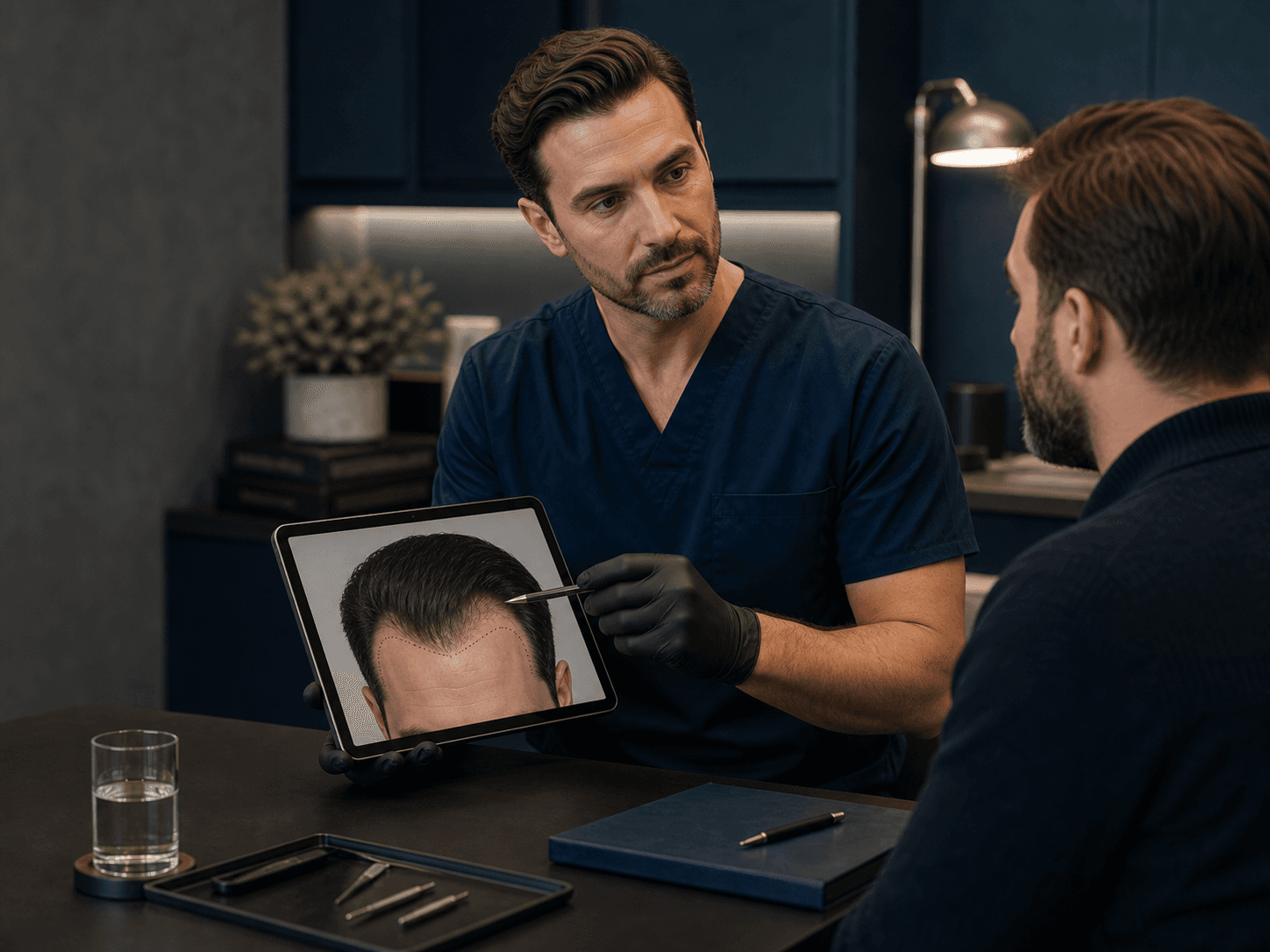
A strong consultation usually feels specific rather than scripted. It should discuss your pattern of loss, donor area, priorities, likely limitations, and what a realistic result may look like for your case.
If the conversation stays vague, rushes to a price, or avoids discussing limitations, you may not yet have enough information to judge the provider properly.
Section 3
What standards should patients look for in London?
For many patients in England, doctor registration and provider regulation are part of the trust decision. Patients often want to know whether the treating doctors are GMC-registered and whether the provider setting is CQC-registered.
Those signals do not replace common sense, but they help patients assess the clinical setting, governance structure, and level of accountability around treatment and aftercare.
- Clear explanation of who performs each stage
- Transparent consultation and suitability process
- Credible discussion of aftercare and follow-up
- Realistic language around outcomes and density
Section 4
Why before-and-after photos are only one part of the picture
Photos can be useful, but they should not carry the entire decision. Patients should also know the area treated, how long after treatment the photo was taken, and whether the result reflects the kind of case they actually have.
Good proof supports the clinical discussion. It should not replace questions about planning, suitability, standards, and recovery.