
Section 1
Why female cases are usually assessed differently
Female hair restoration often needs a more specific suitability discussion because the pattern of thinning can be more diffuse and the diagnosis behind it may matter more to the treatment decision.
That means a consultation should not only ask what bothers you visually, but whether transplant is the right tool for that concern in the first place.
Section 2
What a consultation should check
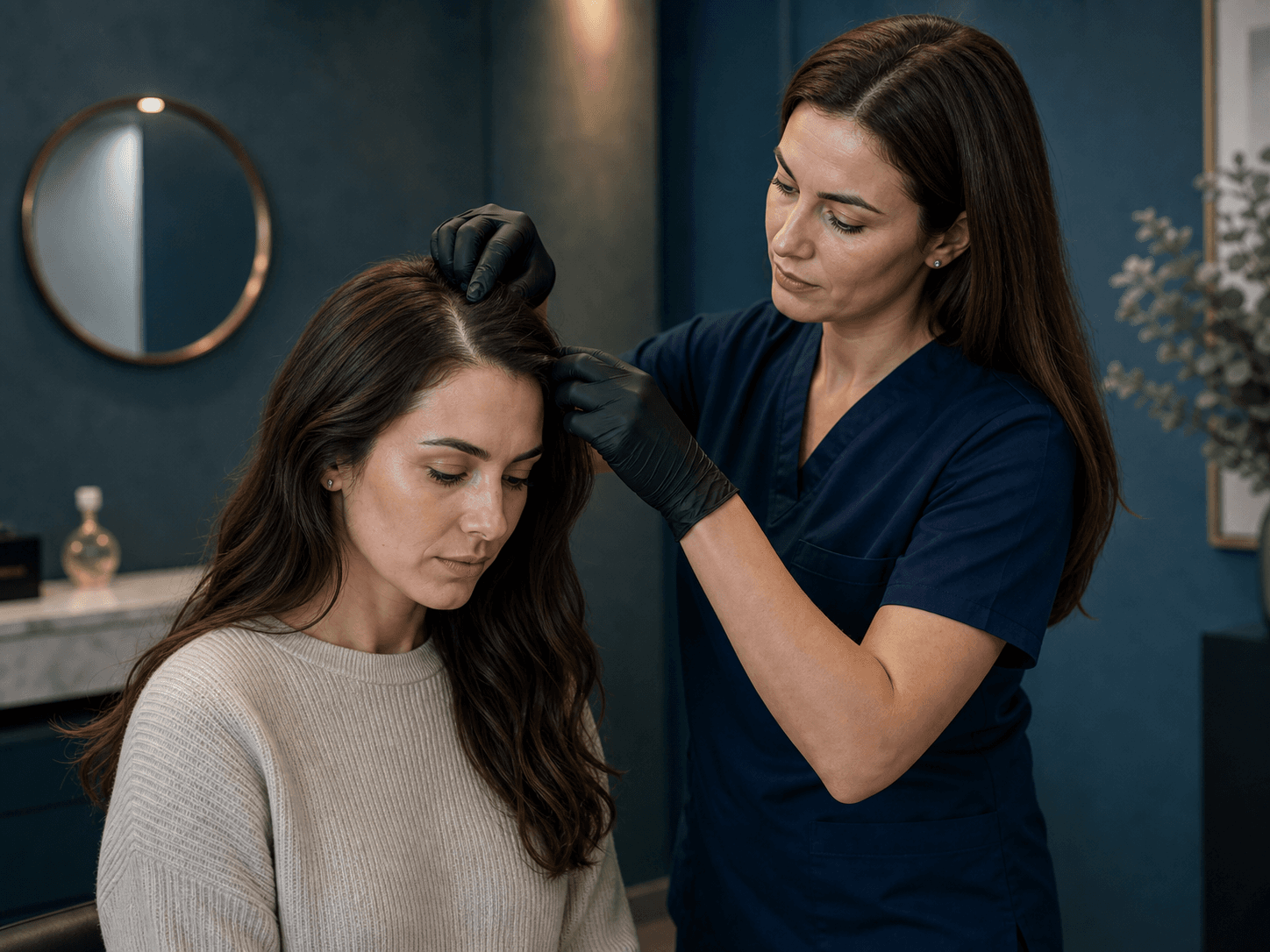
For female patients, the consultation should look closely at the pattern of loss, donor area quality, whether the concern is frontal, part-line, temporal, scar-related, or diffuse, and what kind of improvement is realistically achievable.
Patients may also want to discuss discreetness, shaving preferences, recovery planning, and whether the treatment goal is subtle softening, stronger framing, or selective density support.
- Pattern and cause of thinning
- Donor availability and long-term planning
- Framing, density, and subtlety goals
- Whether a non-surgical element should be discussed alongside transplant
Section 3
Why realistic density planning matters
Female patients are often comparing refined visual goals rather than broad area coverage. That makes density planning, hairline softness, and blending especially important.
A useful consultation should explain not only what can be added, but how the design is intended to look natural in everyday life rather than only in clinic photos.
Section 4
Why London can appeal for female patients
Some female patients prefer a London route because consultation, review, and follow-up can feel easier to manage locally and more discreetly. The decision still depends on the individual case, but local access can matter when you want the process to feel more controlled from the start.